
Money20/20 USA 2026: A Fintech Executive's Guide to Networking, Partnerships & Payments
Four days in Las Vegas can accomplish what might otherwise take months of introductions, emails, and conference calls. But only if you arrive knowing who you need to meet, what questions to ask, and which relationships are worth pursuing.
Money20/20 USA 2026 brings together financial institutions, fintech founders, payment processors, acquiring executives, software companies, and investors at a time when the financial technology industry is experiencing significant changes in payment infrastructure, artificial intelligence, embedded finance, and regulatory oversight.
For executives working in payments, the opportunity extends well beyond discovering new technology.
It's about identifying the right banking relationships, evaluating infrastructure providers, understanding emerging business models, and establishing partnerships that can translate into measurable commercial value.
At Align Ecommerce, our leadership has attended Money20/20 since 2018. From our perspective as a Las Vegas-based payment-processing company, the most productive conference conversations rarely begin with a product demonstration.
They begin with understanding how two businesses might solve a problem together.
Here's how fintech executives can approach Money20/20 USA 2026 with that objective in mind.
Why Money20/20 Matters to Fintech Executives in 2026
Financial technology has become increasingly specialized.
A company developing embedded payments may depend on a sponsor bank, an acquiring institution, a payment gateway, an identity-verification provider, and several additional technology partners before its product can operate commercially.
Each relationship introduces technical requirements, contractual obligations, regulatory considerations, and operational dependencies.
Money20/20 creates an opportunity to meet many of these participants within the same conference.
For a fintech founder, that might mean identifying an acquiring partner willing to evaluate a new business model. For an established payments company, it could mean exploring additional distribution relationships or evaluating technology that improves an existing payment stack.
The value isn't necessarily the number of business cards collected.
It's the ability to determine whether the people and organizations you're meeting can actually advance your business objectives.
What Is Money20/20 USA 2026?
Official Money20/20 USA website
Money20/20 USA is a financial technology conference connecting organizations across banking, payments, software, financial services, and investment.
According to the organizer's published 2026 event figures, the conference is promoted as bringing together:
The conference features executive discussions, technology presentations, networking programs, and meetings across the financial services ecosystem.
Attendees seeking registration, transportation, venue access, and practical arrival information can reference our companion article, Money20/20 Las Vegas 2026: A Merchant's Guide to a Successful Trade Show .
Who Should Fintech Executives Prioritize Meeting?
Not every conference connection has the same strategic value. Before arriving, executives should identify which categories of organizations can directly support their growth plans.
1. Sponsor Banks and Acquiring Institutions
For payment facilitators, ISOs, and fintech companies developing payment products, banking relationships can be among the most important conversations at Money20/20.
A prospective banking partner may provide access to acquiring capabilities, settlement infrastructure, or regulated financial services, depending on the proposed business model.
However, a bank's participation in fintech does not mean it supports every industry, merchant category, geography, or payment arrangement.
Executives should determine which services the institution actually provides, which entity holds the relevant responsibilities, and whether the proposed program fits its risk appetite.
2. Payment Processors and Payment Facilitators
Processors and payment facilitators may offer different approaches to merchant onboarding, transaction processing, settlement, reporting, and platform distribution.
For SaaS companies considering embedded payments, these relationships can influence the entire customer experience.
Important questions include who performs underwriting, how merchants are boarded, what transaction data is accessible, and which party manages disputes and ongoing risk.
3. Payment Gateways and Orchestration Platforms
Payment gateways and orchestration providers are particularly relevant for companies operating across multiple processors, markets, or commerce platforms.
Executives should evaluate API functionality, tokenization, recurring billing, transaction routing, reporting, and integration requirements.
A sophisticated technology platform is not automatically compatible with every acquiring institution.
Commercial and technical compatibility must be established before treating a potential integration as viable.
4. SaaS and Embedded-Finance Providers
Software companies increasingly look to incorporate payment acceptance and financial functionality into their platforms.
These businesses can represent valuable distribution opportunities for payment providers.
A productive discussion should examine merchant demographics, transaction volume, payment flows, technical ownership, and whether the platform's users require specialized underwriting.
5. Fraud Prevention and Identity Technology Companies
Identity verification, transaction monitoring, device intelligence, and fraud screening are important components of payment infrastructure.
Executives should look beyond claims about detection accuracy and ask how products fit into authorization workflows, operational review, and the broader risk-management process.
6. Risk, Compliance, and Dispute-Management Providers
Merchant risk doesn't end when a transaction is approved.
Dispute management, transaction monitoring, regulatory obligations, and card-brand compliance can materially affect the economics of a payments program.
Companies offering these services may provide opportunities to improve merchant operations or expand a platform's capabilities, subject to technical and contractual review.
7. Investors and Strategic Distribution Partners
Not every worthwhile relationship involves integrating technology.
Investors, consultants, enterprise software providers, and distribution organizations may provide access to new markets or commercial opportunities.
The most productive discussions establish whether there is genuine strategic alignment rather than pursuing introductions simply because a company is well known.
Which Companies Should Executives Watch at Money20/20 2026?
Rather than attempting to visit every recognizable company, executives should build a shortlist around their business objectives.
Several established financial technology organizations have identifiable representatives on the official 2026 speaker agenda.
Adyen
Adyen's Chief Risk & Compliance Officer, Mariëtte Swart, is listed as a 2026 keynote speaker. For payment executives, Adyen is a relevant company to study for unified commerce, acquiring infrastructure, and risk management.
Visa
Visa's SVP and Global Head of Visa Direct, Vira Platonova, appears on the published agenda for discussions involving payment rails and moving money across markets.
Mastercard
Mastercard Chief Compliance Officer Howard Fields is listed on a session addressing risk and compliance operations.
Stripe
Stripe's Head of Connect & Money Management, Neetika Bansal, is listed for a session discussing tokenized assets and stablecoins.
Plaid
Plaid CEO Zach Perret is listed for a session examining artificial intelligence and financial services.
Participation references are based on Money20/20's published 2026 speaker and agenda listings. Speaker listings do not establish exhibitor status, sponsorship, meeting availability, or a commercial relationship with Align Ecommerce.
Executives should review the official speaker directory and attending companies information before finalizing meetings.
Five Payment Industry Trends Executives Should Watch
1. Embedded Finance and Banking-as-a-Service
Embedded finance allows software platforms to incorporate financial functionality directly into the experiences they provide.
But offering a seamless user interface does not eliminate the need for banking oversight, licensing analysis, underwriting, or compliance controls.
For fintech executives, the important question is how responsibilities are distributed between the technology company, regulated financial institution, and other service providers.
A partnership that looks commercially attractive must also have a sustainable operating model.
2. Payment Orchestration and Multi-Provider Infrastructure
Payment orchestration is increasingly relevant for businesses evaluating more than one processor, gateway, or payment provider.
Depending on the platform, orchestration may support routing decisions, consolidated reporting, provider connectivity, or token-management capabilities.
However, redundancy is not as simple as connecting two processors.
Token portability, network-token arrangements, merchant-account ownership, recurring-billing continuity, and contractual restrictions can all affect whether transactions can move between providers.
The executive conversation should focus on what is technically possible, contractually permitted, and commercially practical.
3. Artificial Intelligence, Fraud Prevention, and Identity
Artificial intelligence is becoming an important subject in financial services, including fraud detection, identity verification, operational automation, and risk analysis.
Money20/20's 2026 agenda includes discussions addressing AI in financial infrastructure and compliance.
Money20/20 USA
For payment companies, the distinction between a promising demonstration and a production-ready tool matters.
Executives should examine model governance, false positives, explainability, data access, and human escalation procedures.
An automated decision is only valuable if the organization can manage its consequences.
4. Stablecoins, Cross-Border Payments, and Emerging Rails
Stablecoins and alternative payment rails are generating interest because of their potential applications in settlement, cross-border money movement, and programmable financial services.
Yet the commercial implications vary considerably by jurisdiction, asset, provider, and transaction structure.
A technology announcement should not be interpreted as evidence that a payment method is universally available, bank-approved, or appropriate for every merchant.
Executives evaluating emerging rails should examine liquidity, settlement finality, redemption, custody, compliance obligations, and the operational responsibilities of each participant.
5. Compliance, Merchant Risk, and Underwriting
While much of the fintech industry focuses on transaction speed and automation, underwriting and risk management remain central to sustainable payment operations.
Merchant category, fulfillment timing, refund exposure, transaction size, chargeback history, and business practices can influence acquiring decisions.
This is particularly important for subscription businesses, high-ticket transactions, future-delivery merchants, and regulated industries.
The question isn't simply whether a provider can process a transaction.
It's whether the underlying relationship can appropriately support the merchant's business model over time.
Executives looking to deepen their understanding of industry terminology can reference Align Ecommerce's Payment Processing Glossary.
How to Prepare for Strategic Networking at Money20/20
A strong conference schedule starts before arriving in Las Vegas.
The most effective approach is to organize potential meetings around a defined commercial objective rather than the size or popularity of the company.
Establish Three Primary Objectives
Examples include identifying an additional acquiring relationship, evaluating a payment technology partner, or developing a new distribution channel.
Each objective should have a measurable next step.
A conversation with a prospective gateway partner, for example, should ideally establish whether technical documentation, a solution-engineering meeting, or a commercial review is warranted.
Research the People, Not Just the Companies
A company may have multiple executives attending with very different responsibilities.
A Chief Revenue Officer may be appropriate for a distribution partnership, while a Head of Payments or Chief Risk Officer may be better suited for infrastructure or underwriting discussions.
Researching responsibilities in advance reduces the risk of spending valuable meeting time with someone who cannot advance the conversation.
Schedule Meetings Before the Conference
Money20/20 provides its Money20/20 Connect networking platform for arranging meetings with other attendees.
The organizer confirms that the 2026 platform is live for meeting requests.
October 18-21, 2026
Prioritize high-value conversations and leave flexibility for referrals, unexpected introductions, and relevant agenda sessions.
Prepare a Clear Explanation of Your Business
An executive should be able to explain the company's business model, target market, commercial value, and immediate partnership objective in under a minute.
The goal isn't to deliver a polished sales pitch.
It's to help the other person determine whether there is a legitimate reason to continue the discussion.
Seven Questions Fintech Executives Should Ask Potential Partners
The right questions can reveal more about a potential partnership than a lengthy product presentation.
1. Which banking, acquiring, or processing relationships support your services? Understanding the underlying service model helps identify dependencies, responsibilities, and potential limitations.
2. Which geographic markets, industries, and transaction types can your platform support? A provider's overall geographic footprint may be broader than the capabilities available through a particular product or banking arrangement.
3. Who is responsible for merchant underwriting and ongoing risk decisions? Clarify which organization evaluates merchants, approves onboarding, monitors transactions, and manages account restrictions.
4. What integration options are available, and who controls the payment credentials? API functionality, token ownership, portability, and migration requirements can materially affect implementation.
5. How is the commercial relationship structured? Determine how responsibilities, fees, revenue sharing, settlement obligations, and contractual commitments are allocated.
6. How are compliance, fraud, and dispute-management responsibilities divided? A clear allocation of responsibilities helps avoid operational gaps after launch.
7. Who owns implementation, technical escalation, and ongoing account support? Even a strong commercial agreement can become difficult if the participating organizations have no clear process for resolving problems.
A prospective partner doesn't need to answer every technical question during a first meeting. However, the conversation should establish who can provide those answers and what happens next.
How to Evaluate Sponsor Banks and Payment Infrastructure Partners
This is one of the most important areas of diligence for fintech companies seeking to develop payment products or expand existing infrastructure.
Understand the Actual Banking Relationship
The term sponsor bank can describe different roles depending on the payment or financial-services program.
A sponsoring institution may support a payment facilitator or another regulated arrangement, while an acquiring institution may be responsible for merchant acquiring and related network obligations.
These roles can overlap, but they should not be treated as interchangeable.
Executives should identify the actual financial institution, the services it provides, and which entity is responsible for the relevant compliance and settlement obligations.
Payment Facilitator Versus Traditional Merchant Accounts
Payment facilitators and traditional merchant-account arrangements may provide different onboarding, contractual, settlement, and operational structures.
A payment facilitator model can be attractive for platforms seeking an integrated merchant experience, but it also introduces important questions about sponsored merchants, risk controls, and program responsibilities.
A traditional merchant-account structure may be more appropriate for certain merchants requiring individualized underwriting or a specific acquiring relationship.
Neither approach is universally superior.
The correct structure depends on the merchant population, business model, operational requirements, and available banking support.
Evaluate the Entire Payment Stack
Executives should understand how the gateway, processor, acquirer, fraud provider, merchant-management system, and reporting environment work together.
A payment stack that appears straightforward in a demonstration may require
Money20/20 USA 2026 Executive Guide FAQ
Answers to common questions from fintech executives, payment professionals, SaaS founders, and strategic partnership teams attending Money20/20 in Las Vegas.
What is Money20/20 USA 2026?
Money20/20 USA 2026 is a financial technology conference taking place October 18–21, 2026, at The Venetian in Las Vegas. It brings together organizations across payments, banking, fintech, software, investment, and financial infrastructure.
Who should fintech executives prioritize meeting at Money20/20?
Fintech executives should prioritize sponsor banks, acquiring institutions, payment processors, payment facilitators, gateway and orchestration providers, embedded-finance platforms, fraud and identity vendors, and strategic distribution partners. The right mix depends on whether the objective is infrastructure, distribution, fundraising, compliance support, or technical integration.
Why does Money20/20 matter for payments and fintech executives?
Money20/20 offers an opportunity to meet decision-makers across banking, risk, partnerships, compliance, product, and financial infrastructure. A focused meeting strategy can accelerate conversations that might otherwise require months of separate outreach.
How should executives prepare before attending Money20/20?
Executives should establish clear commercial objectives, develop a prioritized list of potential partners, research relevant decision-makers, and schedule meetings before the conference. They should also prepare a concise explanation of their business model, technical requirements, and strategic partnership goals.
What should executives ask potential payment or banking partners?
Important questions concern banking and acquiring relationships, geographic coverage, underwriting ownership, integration capabilities, tokenization, commercial structure, compliance responsibilities, and ongoing support. Executives should determine whether the provider can support the operational requirements of their particular business model.
Is this guide intended for merchants attending Money20/20 for the first time?
This guide primarily serves fintech executives, payment professionals, and strategic partnership teams. Readers looking for registration, venue logistics, transportation, and practical first-time attendee guidance should review Align Ecommerce's companion Money20/20 merchant guide.
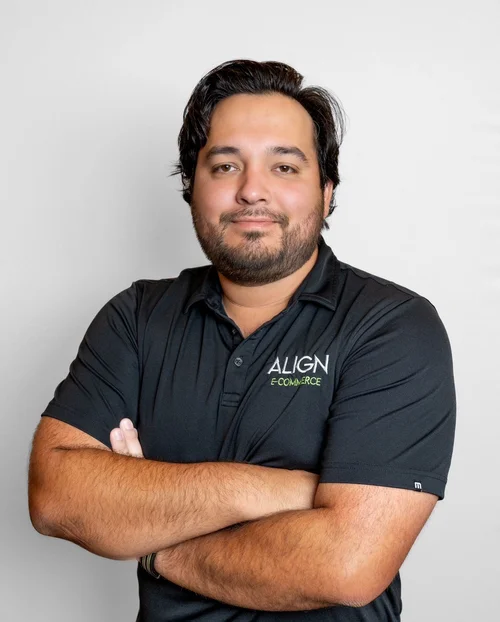
Joshua Cobian
Joshua Cobian is the President and Founder of Align Ecommerce, a Las Vegas-based payment-processing and merchant-services company specializing in ecommerce, high-risk merchant accounts, and customized payment infrastructure.
With more than a decade of payments industry experience, Joshua works with businesses on merchant underwriting, acquiring relationships, payment gateways, fraud prevention, chargeback strategy, and complex payment operations.
Based in Las Vegas, Joshua writes about financial technology, payment infrastructure, merchant risk, and the commercial realities of accepting payments. Align Ecommerce leadership has attended Money20/20 since 2018, bringing an operational perspective to industry conversations and emerging technologies.